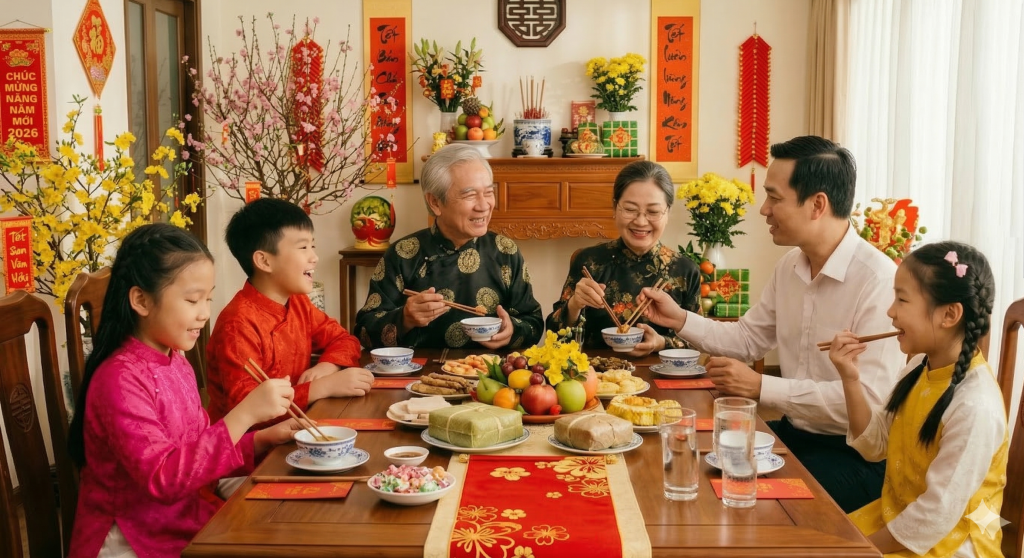
As someone who was born and raised in Vietnam, Tết was always the time of year I looked forward to the most. Even weeks before the holiday arrived, the entire country seemed to shift into a different rhythm. Markets became busier, streets filled with flowers, and families began preparing traditional foods. The sights and sounds of the Tết markets, the smell of freshly wrapped bánh chưng, and the bright colors of peach blossoms and kumquat trees all came together to create an atmosphere that felt uniquely Vietnamese.
Vietnam is often described as a collectivist culture, where family and community play a central role in everyday life. During Tết, this cultural value becomes especially visible. People travel across cities, provinces, and even countries just to return home and reunite with their families. Mothers and aunts wake up early to visit local markets, carefully choosing orchids or cát tường flowers in the hope that the new year will bring prosperity and good fortune. These rituals may seem simple, but they carry deep emotional meaning that has been embedded in Vietnamese culture for generations.
For those unfamiliar with the traditions behind this holiday, this guide to the Tết holiday provides a helpful overview of why it is considered the most important celebration in Vietnam.
Because of this emotional depth, many major brands in Vietnam understand that Tết marketing cannot rely on product promotion alone. Instead, successful campaigns tap into the shared cultural values of reunion, gratitude, and belonging.
One memorable example is Pepsi’s “A Tết Story” campaign, which focused on the emotional reality faced by many Vietnamese workers who spend most of the year far from home. The campaign carried a powerful message: helping Vietnamese families experience a complete and meaningful Tết by bringing loved ones home. Through storytelling rather than advertising, the campaign resonated deeply with audiences both in Vietnam and among the Vietnamese diaspora abroad.
The success of campaigns like this reveals an important marketing lesson. When brands align themselves with cultural values that people genuinely care about, they stop feeling like advertisers and start becoming part of the story. In Vietnam, Tết is not simply a holiday. It is a moment of collective emotion. And for marketers who understand that, it becomes one of the most powerful storytelling opportunities of the year.


 Kaley's Blog
Leave a reply to echo1112 Cancel reply